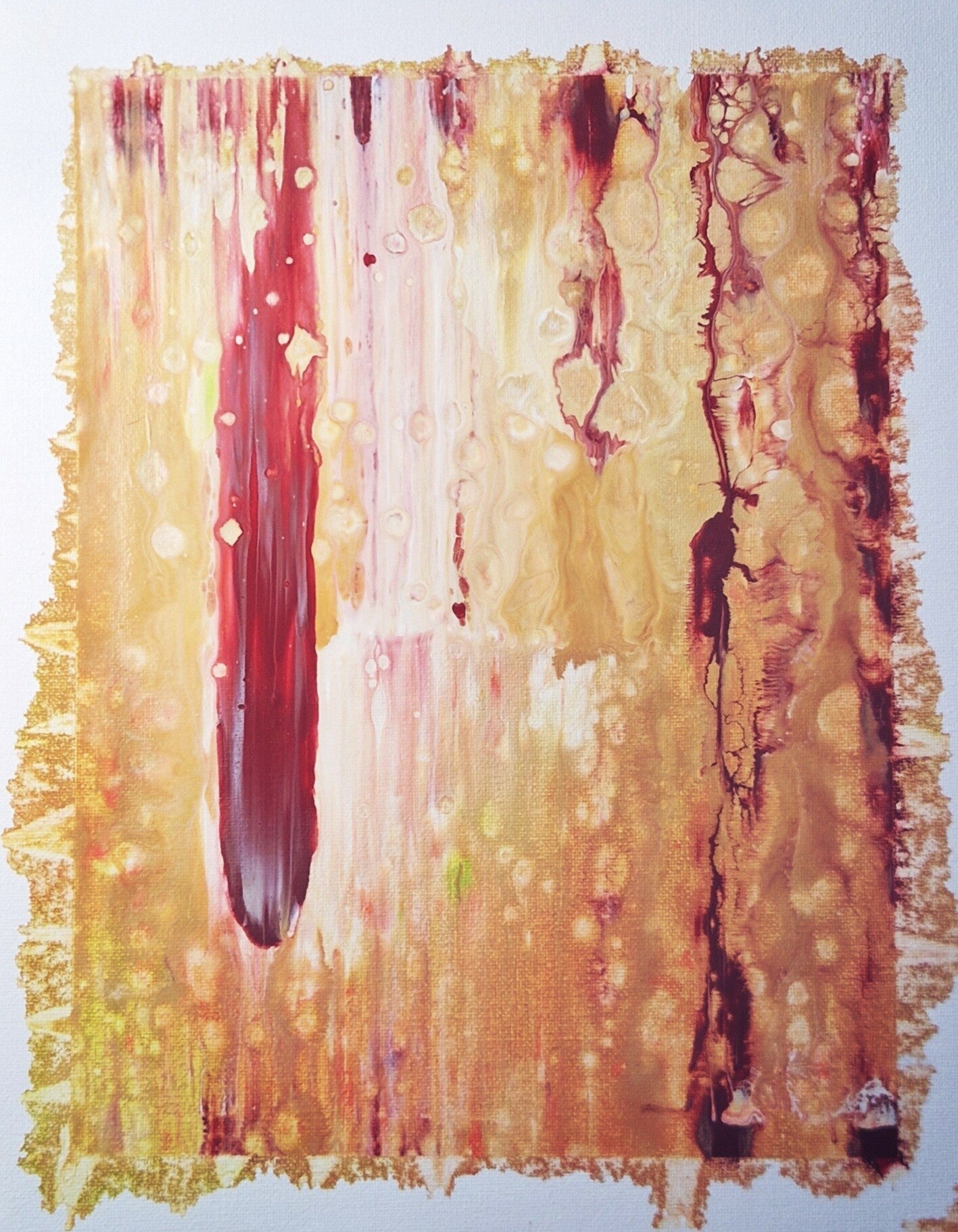
My hands move faster than my inner critic can speak.
I’ve realised that when I apply the 80/20 rule—focusing on the vital few actions that move the needle—without a rigid end goal, the pressure to "be" something vanishes. What remains is the process. I’ve started calling this journey Somatic Visual Entropy: the conscious act of balancing order and chaos to navigate my own internal fog.
By manipulating entropy on the canvas, I am physically practicing emotional regulation. Here is how I am integrating this science into my well-being.
My Regulatory Process
I view the canvas as a laboratory for my nervous system. Depending on the day, I move between two extremes to find my center:
1. Managing the Fog (Low Entropy)
When I feel scattered or overwhelmed, I lean into Low Entropy. I use structured patterns, repetitive linework, and grids to activate the Prefrontal Cortex. This creates a neurological anchor, providing a sense of tangible control over the "mess" in my head.
2. Releasing the Pressure (High Entropy)
When I feel rigid, stagnant, or emotionally repressed, I invite High Entropy. I allow for splashes, unpredictable bleeds, and gestural marks that lack immediate logic. This honors the "mess" rather than trying to fix it, giving my rawest emotions a physical space to exist without the interference of my analytical mind.
3. The Goldilocks Zone (The Critical State)
I am constantly searching for the Critical State—the sweet spot where raw, high-entropy emotions coexist with grounding techniques. It is the precise point where my "Storm" meets my "Anchor".
4. Neurological Grounding
I use repetitive motions as a meditative tool. These rhythmic actions lower my nervous system's arousal, pulling me out of a "fight or flight" overwhelm and into a state of focused safety.
5. The Philosophy of the Practice
I use abstraction to bridge the gap between my analytical mind and my emotional self. Because abstraction plays on pareidolia—the brain’s tendency to find meaningful images in random patterns—my mind naturally searches for logic within the chaos. This helps me externalize complex feelings that I can’t yet put into words.
6. The Goal is Integration.
By allowing chaos and order to live on the same canvas, I am accepting that my life can be messy while I remain structured.Ultimately, this isn't just about making art; it’s about communication. I am speaking directly to my subconscious, giving my inner critic a much-needed rest while my hands do the heavy lifting. Through visual entropy, I don't just find balance—I create it.
Add comment
Comments
Love love love. So vibrant